



How to choose the style of a custom pin badge?

Ethan Carter

Customised pin badges have been a popular method of indicating identity, celebrating achievement, and expressing flair for decades. Pin badges are adopted by organizations, schools, clubs, charities, collectors, and members of the general public in the United Kingdom. Pin badges are an economical, affordable, and lasting method of celebrating an occasion, raising awareness of a cause, or promoting a brand.
The reason pin badges are in such demand is the range of styles available. The style comes with its own benefit, cost, and design potential. This guide considers the most popular custom pin badge designs found in the UK, outlines how to select the right design depending on use and price, and offers a step-by-step guide to creating your own badge.
I. What are some common custom pin badge styles?
Custom pin badges come in many varieties, but six styles are most frequently used in the UK.
1. Soft enamel pin badges
Soft enamel badges are a highly favored choice. They have sunk areas infilled with enamel colours, which provide a raised sensation with the metal lines proud of it. They are colourful, durable, and relatively inexpensive, so they're ideal for schools, clubs, charities, and advertising campaigns.
2. Hard enamel pin badges
Hard enamel badges are smooth and shiny to the finish. The enamel is buffed flat against the metal edges after application and produces a shiny, hard-wearing appearance that will endure. Hard enamel badges are higher-quality than soft enamel and are generally used for corporate use, award of recognition badges, or worthwhile collector's items.
3. Printed pin badges
Print badges use a digital or screen-print process for copying detailed artwork, colours, and fine detail not possible with enamel. A clear epoxy coating is usually used for protection. They are best suited for photographic detail images, logos with detailed features, or full-colour graphics.
4. Embroidered/woven pin badges
Instead of enamel and metal, embroidered or woven badges make use of threads to create the design. While traditionally associated with patches, they can also be fitted onto pin fixings. The solution is especially well-suited for groups preferring a textile look, usually for uniforms or loose branding.
5. Button pin badges
Button badges are cheap and lightweight, making them suitable for use in situations where large quantities of badges need to be produced. They tend to be a printed picture behind a protective layer of plastic, pressed onto a disc-shaped metal backing with a pin. In fashion for events, campaigns, and activities for youth, they are perfect for ready distribution.
6. PVC pin badges
PVC badges utilize soft, rubber-like material, allowing flexible forms and vivid colours. PVC is water-resistant and durable, with a more lighthearted appearance than metal badges. They are most commonly used by most youth clubs, promotional activities, and social clubs due to their fun and creative appearance.
II. How to choose a badge style based on purpose?
 The selection of the optimal badge is not just a question of design, but also of utilization of the badge, to whom it will be directed, as well as finance.
1. Professional and corporate events
For awards, conferences, or formal branding, printed badges or hard enamel badges are normally most appropriate. They convey quality and professionalism and can survive long-term use. While more costly than simple designs, they uphold the reputation of a company.
2. Nonprofit organization, school, or club
Soft enamel badges are widely used by schools as prefect badges, student awards for achievement, or club badges. They are cheap but sturdy enough to withstand daily wear and tear. Nonprofit organizations use them as awareness or fundraising pieces since they find a middle ground between price and attractive design.
3. Promotion events
For distribution at the festival level, trade shows, or drives to raise awareness, PVC badges or button badges are the most suitable. They are inexpensive, simple to personalize, and a delight to hand out in bulk. Because they are more affordable, they are best used for short-run drives where reach takes precedence over the long-run usability.
4. Collectors and special editions
The collectors prefer quality hard enamel or detailed printed badges. The badges of these types can showcase detailed designs and are durable, making them ideal for limited series. Special finishes, such as gold plating or glow-in-the-dark enamel, also make them desirable to collectors.
5. Youth/informal groups
Youth groups, clubs, or social occasions appreciate colourful buttons or PVC badges. They are inexpensive, safe, and appealing without losing freedom of choice in the design. Since youngsters may collect or trade badges, an inexpensive yet appealing design ensures turnout.
III. Step-by-step guide to badge design
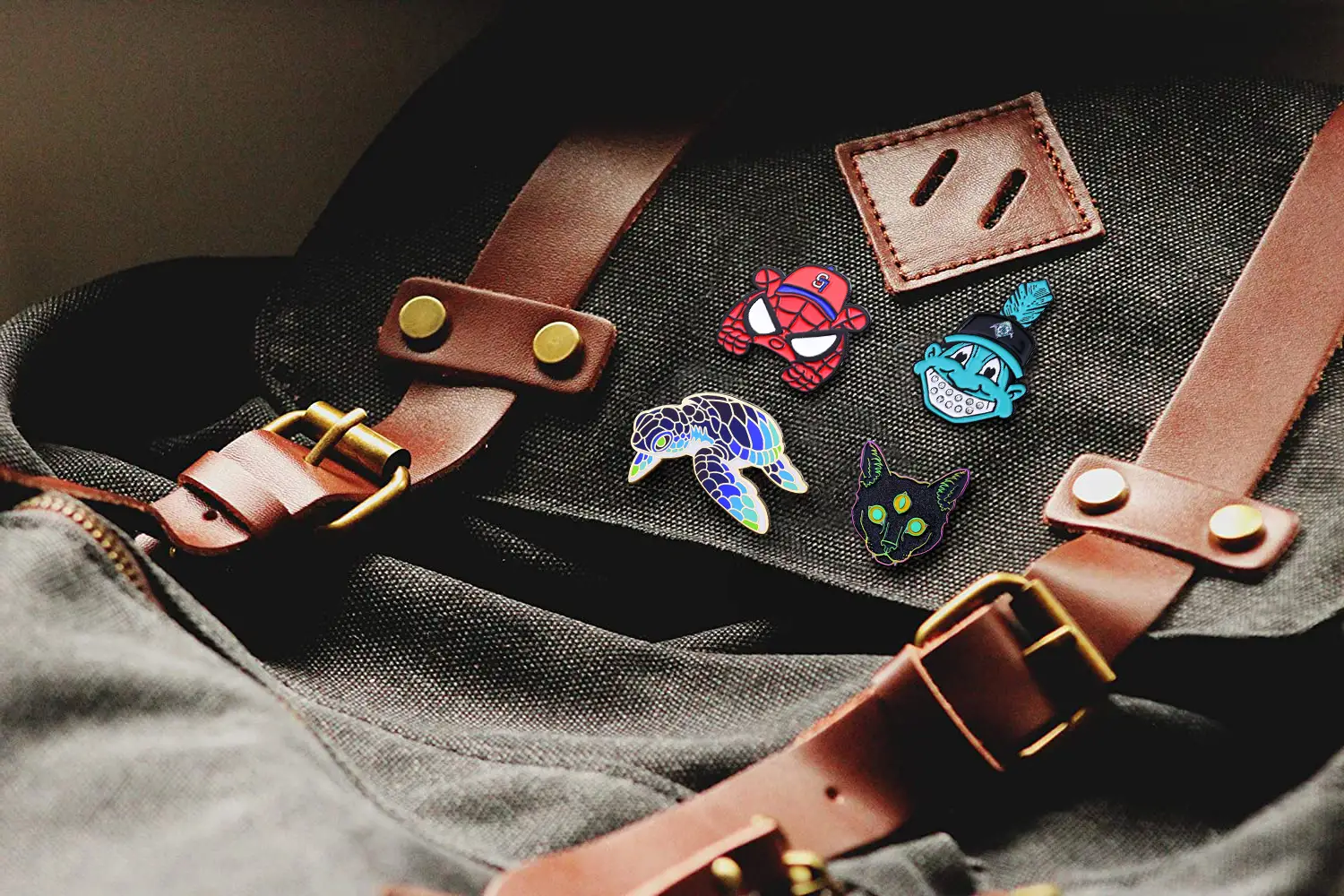 Pin badge design is not just about choosing colours and attaching a pin to the back. A thoughtful process ensures the final product looks professional, is communicative of the message, and is within budget. This is a more detailed step-by-step process, typically employed by UK companies, schools, and charities when commissioning badge schemes.
1. Decide on the purpose and function
The first is to determine the purpose of making the badge.
●Corporate use: For promotional use at exhibitions, employee recognition, or customer presents.
●Schools and clubs: For rewards, prefect badges, or membership identification.
●Charities and nonprofits: For campaigns, charity fund-raisers, or appreciation for volunteers.
●Collectors and retail: For exclusive items sold over the internet or in stores throughout the UK.
Being specific about the purpose prevents wastage of effort and ensures the badge is appropriate for the target market. A charity awareness badge, for example, can be flashy, inexpensive, and easy to mass-produce, whereas a collector's edition may emphasize upmarket finishes and unique styles.
2. Choose a visual style
The style is what makes the badge stand out. You need to think about what style of product you want to customize:
● Classic and professional: Hard enamel or printed badges with simple logos, crests, or coats of arms.
● Fun and engaging: PVC or button badges with bright, playful designs.
● Heritage or traditional: Antique finishes, intricate patterns, or embroidered crests.
In the UK, schools often stick with heritage-style designs, while youth clubs and festivals lean toward bold, colourful graphics. Matching style to audience helps ensure the badge feels relevant and appealing.
3. Consider shape and size
Badges do not have to be round. Unique shapes—such as animals, shields, or even logo shapes cut out—make designs more unique. UK collectors, in particular, enjoy unique shapes that make a badge stand out from mass-produced designs.
Size matters as well. Small badges (20–25mm) are best for unobtrusive lapel identification, whereas bigger ones (35–50mm) are best for drawing attention at functions. It's a matter of finding the middle ground: the badge is large enough to take down information but not large enough to be functional and a nuisance to wear.
4. Select material and finish
Material selection impacts both the appearance and the perceived worth of the badge.
●Metal (hard or soft enamel): Durable, high-quality, and most appropriate for regular wear.
●PVC: Soft, coloured, and informal.
●Embroidered or woven fabric: Classic, soft, and comfortable to wear for uniforms.
Gold, silver, antique bronze, or matte black plating finishes provide character to it. Vintage gold, for example, would be most fitting for historical institutions within the UK, whereas shiny nickel finishes are suited to modern-day branding. Other enhancements, like glitter enamel, glow-in-the-dark, or double plating, can be incorporated into it.
5. Optimize the design
Once the style, shape, and finish are determined, the design must be finalized for production.
● Simplify details: Fine print or excessively detailed logos cannot possibly be reproduced properly.
● Use colour wisely: Enamel badges typically work best with bold colours and high contrast.
● Think about placement: Place logos or slogans centrally and in equilibrium.
● Digital proofing: Most UK suppliers offer free design proofs. Reviewing these allows changes before production.
An optimised design not only renders the badge visually appealing but also saves time and money at the production stage. It is always better to create changes in artwork at the initial stage, compared to being disappointed with the end product.
6. Add practical considerations
Aside from the design itself, functional issues cannot be ignored:
● Fastenings: Normal butterfly clutches are typical, but safety pins, magnetic backs, or locking clasps may be more desirable with some audiences (e.g., children or business people).
● Packaging: Branding on back cards, individual packs, or presentation boxes can create perceived value, particularly for retail or collector markets within the UK.
● Quantity planning: It is smart to order a few spares because reorders of small quantities tend to be more costly and take longer.
IV. Additional tips for custom pin badge orders
Issuing custom pin badges involves more than settling on a design. To have the process go as smoothly as possible and requirements are met, below are some helpful tips, especially for UK purchasers.
1. Check the supplier's minimum order quantity and production time
Every supplier has different requirements. There are some UK badge manufacturers that accept small orders of as few as 50 pieces or even no minimum order quantity, which is ideal for clubs or non-profit organizations. Others may only take larger bulk orders suited for corporate events or retail distribution.
Production timelines also vary. A basic button badge will take a week, while hard enamel or cast PVC badges will take three or four weeks. If the badges need to be ready for an event, such as a school graduation or fundraiser, orders must be prepared well ahead of time.
2. Request samples or review drafts before mass production
Some suppliers in the UK provide design drafts or physical pre-production samples. Using this service, you have the ability to check for design accuracy, color, and size before production in large quantities. This helps you save money on errors, especially when producing corporate identity badges or special edition collector packs.
3. Balance the budget with quality
It is only right to have budget limits in consideration, but badge quality must be commensurate with the audience. Button badges or PVC badges are inexpensive and ideal for an immediate giveaway at a UK music festival. For official awards or more active use, hard enamel or polish finishes show superior quality and a good image for the brand or organisation.
4. Compare British suppliers for improved service
Having a UK supplier normally assures prompt delivery, lower postage, and easier communication. Local companies also understand UK market requirements, i.e., traditional school crest badges or charity awareness ribbons. Inquiring with specific providers in terms of price, quantity made, and design assistance helps you pick the most appropriate one.
5. Consider eco-friendly options
Sustainability is now a growing concern in the UK. Some suppliers produce reusable badges with recycled metal or eco-friendly button badge materials. If your organisation is environmentally aware, choosing an environmentally friendly option not only supports your philosophy but is also likely to be a competitive advantage.
6. Planning for packaging and distribution
Think beyond the badge itself. How will badges be handed out or sold? UK suppliers often throw in extras such as one-per-item backing cards, branded boxes, or high-quality badge presentation boxes. When sold for fundraising or resale, tidy packaging will help make badges more appealing and increase perceived value.
7. Establish long-term relationships with suppliers
If you are able to foresee repeat orders, i.e., yearly awards, holiday sales, or a collector series, it may be worthwhile to establish a long-term relationship with a proven UK supplier. Repeat customers appreciate favorable prices, first-needle production positions, and continuity of design from one successive order to the next.
V. Conclusion
Custom pin badges are nevertheless a timeless and flexible way to express oneself, promote a cause, and celebrate success in the UK. From traditional hard enamel to bright PVC badges, there is a design to accommodate every purse and purpose.
By considering the intended application, audience, and design details in a reflective manner, organisations can render their badge project cost-effective as much as it is effective. Whether for a corporate function, school program, charity fund-raising campaign, or collector's piece, the right pin badge not only serves its purpose but is also an important keepsake.